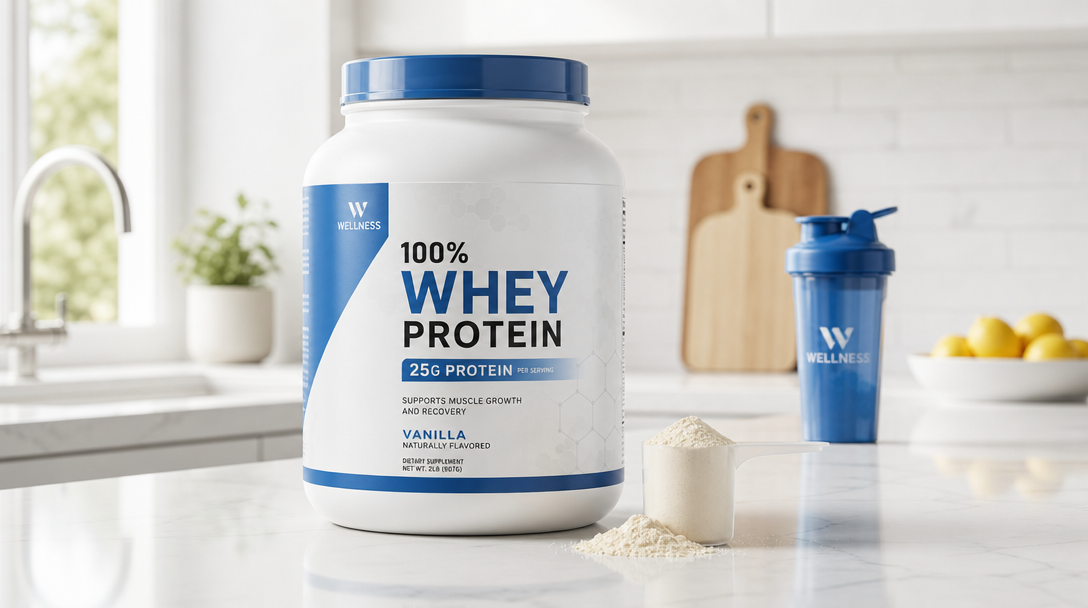
The Complete Beginner's Guide to Protein Powder in 2026
If you've ever stood in the supplement aisle at Chemist Warehouse or scrolled through an online retailer wondering which protein powder to buy — you're not alone. The Australian protein supplement market is one of the most crowded and confusing in the world, with hundreds of products ranging from $0.50 to $4 per serve. Add to that the jargon — whey isolate, casein, BCAA ratios, amino spiking — and it's easy to see why beginners feel overwhelmed.
This guide cuts through all of that. By the end, you'll know exactly what protein powder is, why you might need it, which type to choose, how much to take, and which products offer the best value in Australia right now.
What Is Protein Powder, Really?
Protein powder is exactly what it sounds like: a concentrated source of protein derived from food. It's made by extracting protein from animal or plant sources and drying it into a powder that you mix with water, milk, or your preferred liquid.
The most common source is whey, a byproduct of cheese production. When milk is curdled and strained, the liquid that remains is whey — and it's been used in food and medicine for centuries. Modern protein powders simply concentrate that whey into a convenient, shelf-stable form.
Is it processed? Yes — and that's not inherently bad. Pasteurisation and filtration are forms of processing. Protein powder is still a whole food product, just concentrated. It's no more "unhealthy" than whey cheese or Greek yoghurt.
Why Would You Take Protein Powder?
Protein powder isn't a magic supplement. It won't make you instantly muscular or melt body fat. Its actual value is convenience — it makes hitting your daily protein target faster and easier, especially for people with busy lifestyles.
You might benefit from protein powder if:
- You train regularly and struggle to eat enough protein from whole foods alone
- You have a physically demanding job or lifestyle
- You're trying to lose weight and need to control hunger between meals
- You have a medical condition requiring higher protein intake
- You're a vegan or vegetarian who wants an easy complete-protein source
- You travel frequently and can't always prepare protein-rich meals
If you already eat 2–3 protein-rich meals per day (chicken, fish, eggs, dairy, legumes), you may not need protein powder at all. It fills a gap; it doesn't replace whole foods.
The Main Types of Protein Powder
Understanding protein types is essential to choosing the right product. Here's what you'll find on Australian shelves in 2026:
Whey Protein Concentrate (WPC)
What it is: The least processed whey form. Retains some lactose and milk fats. Protein per serve: 18–22g (varies by brand and serving size) Best for: General use, budget buyers Rough price: $0.80–$1.50 per serve (AUD)
Whey concentrate is the most common and affordable protein type. It contains roughly 70–80% protein by weight, with the remaining composition being carbohydrates (lactose) and fat. If you tolerate dairy well, concentrate offers excellent value for money.
Watch out for: Cheap WPC products that contain less than 70% protein by weight — they may be bulked up with fillers like maltodextrin.
Whey Protein Isolate (WPI)
What it is: Whey concentrate that has been further filtered to remove most lactose and fat. Higher protein density. Protein per serve: 23–27g per 25–30g serve Best for: Lactose-intolerant users, dieters, anyone wanting maximum protein per serve Rough price: $1.20–$2.00 per serve (AUD)
Isolate is filtered to approximately 85–92% protein by weight. It contains significantly less lactose (usually under 1g per serve) and is preferred by those with dairy sensitivities or anyone tracking carbohydrates closely. For most people, the difference between concentrate and isolate is marginal in practice.
Is the premium worth it? If you're lactose intolerant, yes. If you have no dairy issues, concentrate delivers similar muscle-building results at a lower price.
Whey Protein Hydrolysate (WPH)
What it is: Pre-digested whey — the protein has been broken down into smaller peptides for faster absorption. Protein per serve: Similar to isolate, 24–27g per serve Best for: Very niche use cases — hospital settings, post-surgery recovery Rough price: $2.00–$3.50 per serve (AUD)
Hydrolysate is the most expensive whey form and offers no meaningful advantage for healthy gym-goers. The research showing faster absorption doesn't translate into better muscle building in real-world training contexts. Skip it to save money.
Casein Protein
What it is: Another milk protein, but it digests slowly — feeding your muscles over 6–8 hours rather than 1–2 hours. Protein per serve: 20–25g per serve Best for: Overnight recovery, between-meal gaps, people who struggle to eat protein frequently Rough price: $1.20–$2.00 per serve (AUD)
Casein is ideal before bed or during long gaps between meals. It's not necessary if your diet already includes protein-rich foods throughout the day, but it can be a useful tool for muscle preservation during calorie-restricted diets.
Plant Protein
What it is: Protein derived from peas, rice, hemp, pumpkin seed, or soy — or a blend of several. Protein per serve: 18–25g per serve (varies widely) Best for: Vegans, dairy-free diets, people with lactose allergies Rough price: $1.20–$2.20 per serve (AUD)
Plant proteins have historically been considered inferior to whey for muscle building due to incomplete amino acid profiles. However, modern blended plant proteins (typically pea + rice) now offer complete amino acid profiles with comparable leucine content to whey. The evidence shows they build muscle effectively when consumed in sufficient quantities — the muscle-building gap is real but smaller than previously thought.
Watch out for: Single-source plant proteins (rice, hemp) that are low in lysine — an essential amino acid for muscle protein synthesis. Always check the label for a complete amino acid breakdown.
Mass Gainer
What it is: High-calorie protein powders designed to help hard gainers consume a calorie surplus. Protein per serve: 25–50g (varies wildly — check the label) Carbs per serve: Often 50–100g+ Best for: Ectomorphs, people struggling to gain weight despite eating large amounts Rough price: $1.00–$2.00 per serve (AUD)
Most mass gainers are glorified carbohydrate powders with some whey protein added. They're extremely calorie-dense (often 400–700 calories per serve) and can lead to unwanted fat gain if you're not careful. For most people, a combination of whole foods + standard whey protein is a better approach.
How Much Protein Do You Actually Need?
This is the most commonly asked question in fitness nutrition — and the answer is simpler than most people realise.
The Australian Recommended Dietary Intake (RDI) for sedentary adults is 0.84g per kg for men and 0.75g per kg for women. But if you're training regularly, that number is too low.
Current sports nutrition research consistently shows that 1.6g of protein per kg of bodyweight per day is optimal for muscle growth in active individuals. Benefits level off around 2.2g/kg — anything beyond that provides no additional muscle-building advantage for healthy adults.
| Body Weight | Minimum (1.6g/kg) | Optimal (1.8g/kg) | ||
|---|---|---|---|---|
| 60kg | 96g | 108g | ||
| 70kg | 112g | 126g | ||
| 80kg | 128g | 144g | ||
| 90kg | 144g | 162g | ||
| 100kg | 160g | 180g |
How to use this: If you weigh 75kg and train 3–5 times per week, aim for roughly 120–135g of protein per day. A single 25g serve of whey protein per day can meaningfully close the gap for most people whose diet falls short by 20–40g.
When to Take Protein Powder
The fitness industry obsesses over protein timing — the "anabolic window" myth has been thoroughly debunked by research. Total daily intake matters far more than when you consume it.
That said, here are practical, evidence-based timing guidelines:
- Morning: A convenient way to start hitting your daily protein target, especially if breakfast is typically low in protein
- Post-workout: Convenient and effective, particularly after resistance training when muscle protein synthesis is most active. A whey shake immediately after training is a practical choice
- Between meals: Useful if you struggle to distribute protein evenly across the day
- Before bed: Casein or slow-digesting protein can support overnight muscle protein synthesis, but only matters if your total daily intake is already adequate
The bottom line: Take protein whenever it fits your schedule and helps you hit your daily target. Don't stress about specific windows.
Potential Side Effects
Protein powder is safe for the vast majority of healthy adults. However, some people experience:
- Bloating and gas: Usually from lactose in whey concentrate. Switch to isolate or plant protein if this persists
- Digestive discomfort: Some artificial sweeteners (sucralose, acesulfame potassium) can cause issues in sensitive individuals
- Skin breakouts: High dairy intake can trigger acne in some people — whey isolate contains hormones naturally present in milk
- Kidney concerns: No evidence supports kidney damage from high protein intake in healthy adults. If you have pre-existing kidney disease, consult your doctor
Important: Protein powder is a supplement, not a food. It shouldn't replace the majority of your protein intake. Whole food protein sources provide additional nutrients (iron, zinc, B vitamins, omega-3s) that powder can't replicate.
Australian Product Recommendations for Beginners (2026)
Here's a curated list of quality, affordable protein powders available in Australia right now:
| Product | Price (AUD) | Protein/Serve | Notes | ||
|---|---|---|---|---|---|
| Best All-Rounder | Optimum Nutrition Gold Standard 100% Whey | ~$79.99 (2.27kg) | 24g | Trusted globally, consistent quality, 20+ flavours | |
| Best Budget | MyProtein Impact Whey | ~$34.99 (1kg) | 21g | Affordable, frequent sales below $25, 40+ flavours | |
| Best Australian Made | Bulk Nutrients WPI | ~$59.95 (1kg) | 27g | Clean label, Australian-owned, great value | |
| Best Clear/Light | Muscle Nation Clear Whey | ~$64.99 (700g) | 22g | Juice-like texture, very different from standard whey | |
| Best Plant | Garden of Life Raw Organic | ~$59.99 (780g) | 22g | Complete amino profile, organic, third-party tested | |
| Best Isolate | Diveanc Whey Isolate | ~$69.99 (1kg) | 27g | High protein density, low lactose, Australian brand |
Prices are approximate and vary by retailer and promotion. Check ProteinRanked for real-time Australian pricing across major retailers including Chemist Warehouse, Elite Supplements, and Australian Sports Nutrition.
The ProteinRanked Take: 5 Things Beginners Should Know
-
You don't need protein powder to build muscle. Whole foods can meet all your protein needs. Powder is convenient, not essential.
-
Whey concentrate is fine for most people. The premium for isolate is justified mainly for lactose-intolerant users and those tracking carbs closely.
-
Calculate protein per dollar, not price per tub. A larger tub with more servings may seem expensive but work out cheaper per serve. Always compare cost per 25g of protein.
-
Avoid proprietary blends. If a label hides ingredients in a "matrix" without listing individual doses, the product is probably under-dosed. Look for transparent labels.
-
Consistency beats timing. Taking protein at the "perfect" time while eating poorly all day will deliver worse results than hitting your total daily target with a consistent approach.
Frequently Asked Questions
Can I take protein powder if I'm trying to lose weight? Yes. Protein is the most satiating macronutrient and helps preserve lean muscle during a calorie deficit. Just account for the calories in your total daily intake.
Is protein powder safe for teenagers? Protein powder is generally safe for active teenagers, but whole foods should remain the primary protein source. The Australian Institute of Sport and most sports dietitians recommend focusing on food first and consulting a healthcare professional before supplementing.
Do I need to cycle protein powder? No. Unlike some stimulants, there's no physiological need to cycle protein. Your body uses it the same way as protein from food.
What's the best protein powder for beginners with no flavour preference? Unflavoured whey protein is the most versatile option. You can mix it into smoothies, oatmeal, baking, or anything else without altering the taste significantly. Bulk Nutrients and MyProtein both offer unflavoured options at excellent prices.
Can I use protein powder every day? Yes — as part of a balanced diet. There's no evidence that daily whey protein supplementation causes harm in healthy adults. Just make sure your total daily protein intake isn't excessively high (stay under 2.2g/kg).
Last updated 2026-08-03. This guide was researched and published by the ProteinRanked Team for Australian consumers. Prices reflect typical retail at major Australian supplement stores as of August 2026 and may vary by promotion. Protein powder is a dietary supplement, not a replacement for whole foods. For personalised nutrition advice, consult an Accredited Practising Dietitian (APD).