Protein Deficiency in Australia: Are You Actually Getting Enough?
Walk through any Australian supermarket and you'd be forgiven for thinking protein deficiency is impossible here. There are protein bars at the checkout, protein muffins in the bakery, protein milk in the dairy aisle, and a $60 protein tub staring at you from the health-food end cap. Even service stations stock protein shakes now.
And yet, when you look at what Australians actually eat — not what we buy — the picture is more complicated. The Australian Bureau of Statistics' National Nutrition Survey found the average adult gets roughly 14–16% of their energy from protein: around 95g a day for men and 74g for women. That average hides a long tail of people — older adults, women in calorie deficits, plant-based eaters, and fad dieters — who routinely fall short of what their bodies need.
Full-blown clinical protein deficiency (kwashiorkor, oedema, immune collapse) is vanishingly rare in Australia. But sub-optimal protein intake — enough to survive, not enough to thrive — is quietly common, and it shows up as sluggish recovery, creeping muscle loss, and constant hunger.
Here's how to work out whether it applies to you, and what to do about it without spending a fortune.
What "Enough" Actually Means
Australia's official Nutrient Reference Values (set by the NHMRC) put the Recommended Dietary Intake at:
- 0.84g per kilogram of body weight per day for adult men
- 0.75g per kilogram per day for adult women
For an 85kg man that's about 71g; for a 65kg woman, about 49g. These are minimum targets designed to prevent deficiency in sedentary, healthy adults. They are not targets for thriving — and they're a long way below what the sports nutrition research supports for anyone who trains, or for anyone over 60 who wants to keep their muscle.
Two decades of research, including position stands from sports nutrition bodies, point to a more useful range:
| You are… | Target (g/kg/day) | 70kg adult needs |
|---|---|---|
| Sedentary, just avoiding deficiency | 0.75–0.84 | ~53–59g |
| Generally active (walking, occasional gym) | 1.0–1.2 | ~70–84g |
| Lifting or endurance training | 1.4–2.0 | ~98–140g |
| Over 60 (protecting muscle mass) | 1.2–1.6 | ~84–112g |
| Losing weight / in a deficit | 1.6–2.2 | ~112–154g |
Notice anything? If you're a 90kg man who lifts and is trying to lose a few kilos, the evidence-based target is 144–198g a day — roughly double or triple the government minimum, and well above what the average Australian eats.
Why the gap matters more as you age
From about age 30, adults lose 3–8% of muscle mass per decade, and the loss accelerates after 60 (sarcopenia). Ageing muscle is also less responsive to protein — a phenomenon called anabolic resistance — meaning older adults need more protein per meal, not less, to trigger the same muscle-building response. The PROT-AGE recommendations for older adults land at 1.2–1.6g/kg/day, yet older Australians are one of the groups most likely to skimp: tea-and-toast meals, small appetites, and tightened grocery budgets see protein-rich foods dropped first.
Who's Most at Risk in Australia
- Adults over 60. Smaller appetites, fixed incomes, and reduced chewing ability all push meat and eggs off the plate. This is the group where low protein does the most damage — falls, frailty, and hospitalisation.
- Women in calorie deficits. Women already eat less protein on average (74g vs 95g), and when dieting, most cut portion sizes across the board — protein included — losing muscle along with fat.
- People on GLP-1 medications. With appetite-suppressing weight-loss drugs now widely prescribed in Australia, total food intake (and therefore protein intake) drops sharply. Dietitians are increasingly flagging muscle loss as the trade-off; protein needs to be prioritised in every meal eaten.
- Plant-based eaters who don't plan. A vegan diet built on pasta, rice, and vegetables can easily land under 50g a day. It's entirely fixable with legumes, soy, and whole grains — but only if you actually do it.
- Teenage girls. National survey data consistently shows Australian teenage girls have the poorest diets of any demographic group — low iron and low protein, right when bodies are building the most.
- "Fussy" athletes. Runners and cyclists who eat huge volumes of carbohydrate and treat dinner as an afterthought often under-eat protein relative to their training load.
The Signs You're Running Low
Protein deficiency doesn't announce itself. Look for this cluster instead:
- You're hungry all the time. Protein is the most satiating macro; constant snacking often means under-eating it.
- Slow recovery. Strength and muscle that stagnate despite consistent training.
- Getting softer over time. Losing muscle while gaining fat (sometimes at the same weight) is the classic signature of low protein plus low resistance training.
- Thinning hair, brittle nails, poor wound healing. Longer-horizon signals the body deprioritises when protein is scarce.
- Frequent illness. Immune function depends on protein, too.
None of these is diagnostic — but if three or four ring true, your protein intake is the first thing to audit.
How to Close the Gap (Without Living on Shakes)
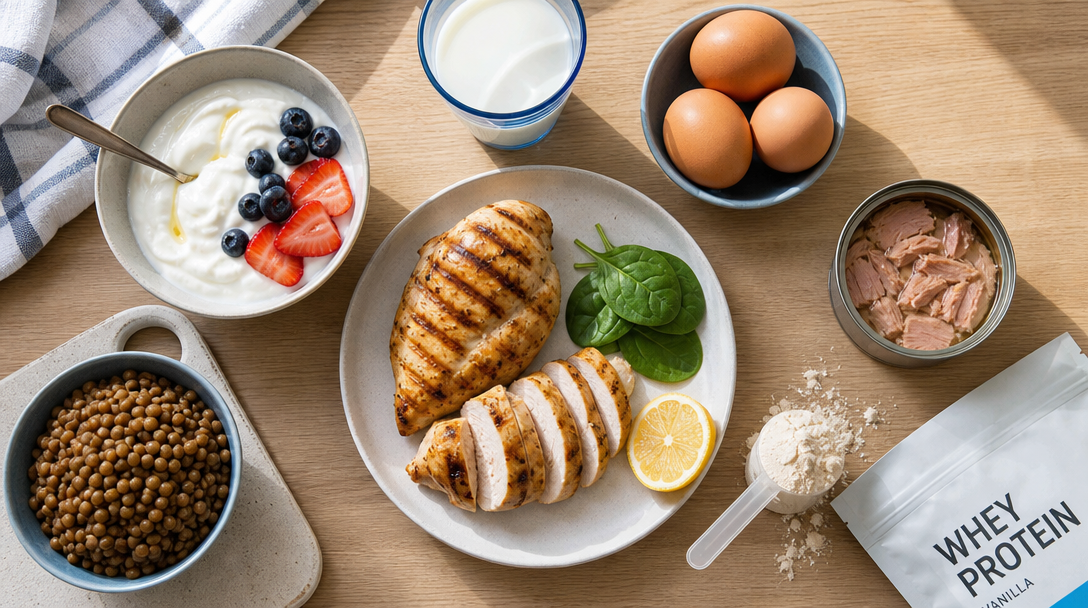
Before you reach for a tub, know this: the cheapest protein in Australia is still whole food. Here's what 25g of protein — one solid meal's worth — actually costs at typical supermarket prices:
| Food | Typical price | Cost for 25g protein |
|---|---|---|
| Dried red lentils | ~$4.00/kg | ~$0.45 |
| Regular milk (home brand) | ~$1.70/2L | ~$0.90 |
| Chicken breast | ~$11/kg | ~$1.25 |
| Budget whey concentrate | ~$30/kg | ~$1.05–1.15 |
| Beef mince (regular) | ~$13/kg | ~$1.65 |
| Canned tuna (95g) | ~$1.60/can | ~$1.90 |
| Eggs | ~$7.50/dozen | ~$2.60 |
| Firm tofu | ~$5.50/350g | ~$2.40 |
| Greek-style yoghurt | ~$9/kg | ~$2.25 |
Yes, that's right — a scoop's worth of protein from lentils costs under 50 cents, and from milk, under $1. Even budget whey is competitive mainly on convenience, not price per gram.
The per-meal rule
Total daily intake matters, but so does distribution. Because of how muscle protein synthesis works, most adults under 60 should aim for 25–40g of protein per meal (older adults: 30–40g, given anabolic resistance). A breakfast of cereal with a splash of milk delivers maybe 6g — which is why so many Australians are "protein-starved" until dinner and then play catch-up with one big steak.
The single highest-leverage fix for most people is a protein-forward breakfast: eggs or Greek yoghurt instead of toast and cereal. One swap, and you've closed the typical gap.
When a Powder Actually Makes Sense
Whole foods first — but powders earn their place when:
- You're plant-based or lactose-intolerant and struggling to hit targets from food alone
- You're over 60 with a small appetite — a fortified smoothie is easier than another chicken breast
- You train hard in a deficit and need convenient protein without the calories
- You're on a GLP-1 medication and need to make limited meals count
For those jobs, a basic whey concentrate (or a soy/pea blend if plant-based) at ~$25–35/kg from an Australian supplier like Bulk Nutrients, True Protein, or Musashi is all you need. You can compare cost-per-gram across dozens of Aussie-sold powders in our product rankings.
The Bottom Line
Australia doesn't have a protein deficiency problem — it has a protein target problem. The official RDI keeps you alive; the evidence says active adults, anyone over 60, and anyone dieting need roughly double it. The good news: closing the gap costs less than most people think, because the cheapest protein sources in the country — lentils, milk, chicken, eggs — all cost under $3 per meal's worth.
Audit your intake for three days. If you're under ~1.2g/kg and you train, or under ~1.4g/kg and you're dieting or over 60, fix breakfast first, add a tin of tuna or a scoop of yoghurt to lunch, and let dinner take care of itself.
Last updated 2026-11-16. This article was researched and published by the ProteinRanked Team. General information only — not medical advice. Protein targets for kidney disease, liver disease, or other medical conditions differ — speak with an Accredited Practising Dietitian (APD) before making major changes to your diet.